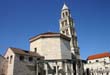
| St. Dujes Cathedral | |
Split
The cathedral of St. Domnius was originally built as Diocletian's mausoleum. It's octagonal shape encircled by 24 columns has almost been completely preserved. Nowadays it serves as a church dedicated to St. Mary, with its bell tower dedicated to St. Duje.
|
|
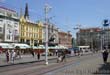
| Ban Jelačić Square | |
Zagreb
The heart of Zagreb is Ban Jelačić Square, named after the governor who led Croatian troops into an unsuccessful battle with Hungary. After many years in hiding during the communist era, the statue of the governor on a horse is now back in the square.
|
|
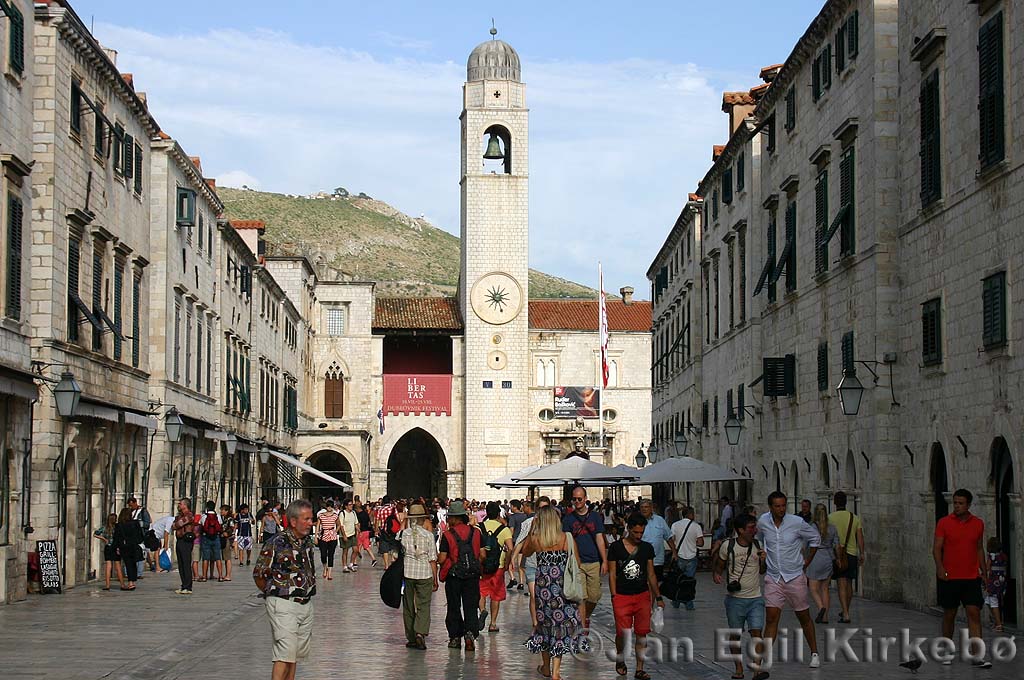
| Stradun | |
Dubrovnik
Passing through the main gate of Dubrovnik's city walls you'll soon come to Stradun, the main pedestrian promenade. It goes straight down to Luža Square, which was once a marketplace.
|
|
|
|
Croatia: Back in the Limelight
The 'Mediterranean As It Once Was', as Croatia is sometimes branded, is quickly being discovered by European summer vacationers. But outside the hustle and bustle of the summer months Croatia reveals itself as a rewarding natural and cultural destination. Most travellers head straight for the coast, which is almost 2000 km long, with its historical cities, thousand islands and azure blue waters. However, the inland is also not to be missed with its rugged wildernes and laid back atmosphere. |
 |
 |
Dubrovnik: Walled Magic
For ages and ages hence, Dubrovnik has astonished visitors with its baroque buildings and marble streets, resting on the edge of the Adriatic. It's almost too beautiful, with hordes of tourists invading it each summer, crammed together within its walls. However, a visit to this magic city outside of the high season is a must on any visit to Croatia. Its one of those magic cities of the world, with a history of both greatness and tragedy. Dubrovnik is also a good stepping-off place for visiting many of the great islands nearby. |
Zagreb: Laid Back Capital
Most tourists give Croatia's interior and its capital Zagreb a miss. However, for a weekend or more Zagreb has enough to keep most people busy. The medieval architecture of its old town is surrounded by neighborhoods of 19th and 20th century Austro-Hungarian buildings, with some old-style communist elements thrown in for good luck. On offer are plenty of restaurants, cafes and galleries, playing host to the city's personality. Framing it all is Zagreb's scenic location between the southern slopes of Mt. Medvednica and the Sava River. |
 |
 |
Split: Adriatic Beauty
The second largest city of Croatia, Split is one of the hotspots on the Adriatic coast tourist trail. It's history goes back several thousand years, and within the walls of its old town one can even see one of the world's most impressive Roman monuments. With its historic skyline set agains the backdrop of large coastal mountains and the Adriatic, Split is a city not to missed. For the best view of the city, head to the top of Marjan Hill on the western end of the city. |
Hvar: Sunny Island
Hvar sits just behind Dubrovnik on the list of the most popular tourist destination in Croatia, but in terms of the number of sunny hours each year it's the country's number one. It's luxurious hotels, restaurants and clubs draw a crowd of the haves, reflected in the oversized yachts parked in the harbor of Hvar Town, as well as the wanna-haves. Hvar can easily be reached on a day-trip from Split, but most tourists make it into a destination in its own right. |
 |
 |
Split: Diocletian Dreams
The attraction of Split to vacationers is nothing new under the sun (literally). The city's beginnings go back to roman Emperor Diocletian, who had his retirement palace built there between the years 295 and 305. After his death, Roman rulers continued to use his palace as a retreat. Nowadays the narrow streets and squares of Diocletians's palace, consisting of over 200 buildings, make up the heart of Split. It's home to about 3000 people, and its restaurants, cafés, shops and bars draw large crowds both day and night. |
|
|
| Luza Square | |
Dubrovnik
The pedestrian promenade Stradun ends in the Clock Tower, first built in 1444. Just next to it in Luža Square is St. Blaise's Church, dedicated to the city's patron. It's style follows the church of St. Mauritius in Venice.
|
|
| Facts | |
Republika Hrvatska

Capital
Zagreb
Largest city
Zagreb
Population
4,480,000 (2011)
Area
56,594 km²
Official language(s)
Croatian
Government
Unitary parliamentary constitutional republic
|
|
| History | |
Croatia
•1000 BC: Arrival of Illyrians, an Indo-European people.
•200 BC-300 AD: Under Roman Empire.
•600s: Settled by Croat tribe.
•Ca. 1500: Arrival of the Ottomans.
•1815: Croatia taken over by Austria.
•1918: Independence declared.
•1928: Yugoslavia established.
•1991-1995: Croat war, followed by independence.
|
|
|