| Zagreb | |
Croatia
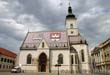
The medieval architecture of Zagreb's old town is surrounded by neighborhoods of 19th and 20th century Austro-Hungarian buildings, with some old-style communist elements thrown in for good luck.
|
|
| Ljubljana | |
Franciscan Church
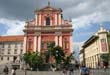
Overlooking Ljubljanas principal square, Prešeren Square, is the pink Franciscan Church of the Annunciation. It was built between 1646 and 1660, and it takes the form of an early-Baroque basilica.
|
|
| Adriatic Beauty | |
Split
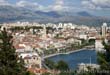
With its historic skyline set agains the backdrop of large coastal mountains and the Adriatic, Split is a city not to missed. For the best view of the city, head to the top of Marjan Hill on the western end of the city.
|
|
|
|
Balkans: South by Southeast
The Balkans is taking a big leap into the tourism arena again. It's rich history, dramatic nature of mountains and coastal sandy beaches, as well as its delightful cuisine, begs to be explored by the intrepid traveller. Check out charming Ljubljana, cruise the beautiful beaches and stunning coastal cities of Dalmatia, head up to Mostar and its famous bridge, before finishing off with a great party in Belgrade. Being a perfectly safe place to travel, there's no excuse not to visit this enchanted part of the world. |
 |
 |
Mostar: Bridge over Troubled Water
Probably the most known sight in Bosnia and Herzegovina, the Stari Most (meaning Old Bridge in English) in Mostar stood for 427 years until it was destroyed in 1993 by Bosnian Croat forces during the Croat-Bosniak war. Fortunately, much effort has gone into reconstructing the city's old town to its former glory. Besides the old bridge Mostar is also known for its old Turkish houses, giving visitors plenty to do for a couple of days there. |
Belgrade: Friday Night Fever
Laying on the confluence of the Sava and the Danube rivers is the Serbian capital of Belgrade. Even the locals agree that it is not the most beautiful of cities, though don't always judge a city by its appearance. Belgrade has emerged as one of the (lesser known) party capitals of Europe, where every night appears to be Friday night. Between its many areas of somber architecture are also some historic gems, like Skadarlija and Zemun. |
|
 |
Croatia: Back in the Limelight
The 'Mediterranean As It Once Was', as Croatia is sometimes branded, is quickly being discovered by European summer vacationers. But outside the hustle and bustle of the summer months Croatia reveals itself as a rewarding natural and cultural destination. Most travellers head straight for the coast, which is almost 2000 km long, with its historical cities, thousand islands and azure blue waters. However, the inland is also not to be missed with its rugged wildernes and laid back atmosphere. |
Ljubljana: Small is Good
Good things come in small packages. This is certainly true for the smallest capital of Europe, Ljubljana in Slovenia. It has escaped the formality of many other capital cities, and has a charming and intimate feel to it. The Old Town, watched over by Ljubljana Castle from the hill above, evokes comparisons to Prague or nearby Vienna without the crowds. In the summer evenings the cafés that line the Ljubljanica River fill up with a mix of students and tourists, with the numerous bars of the keeping up the energy into the late hours of the night. |
|
 |
Dubrovnik: Walled Magic
For ages and ages hence, Dubrovnik has astonished visitors with its baroque buildings and marble streets, resting on the edge of the Adriatic. It's almost too beautiful, with hordes of tourists invading it each summer, crammed together within its walls. However, a visit to this magic city outside of the high season is a must on any visit to Croatia. Its one of those magic cities of the world, with a history of both greatness and tragedy. Dubrovnik is also a good stepping-off place for visiting many of the great islands nearby. |
|
|
| Hvar | |
Croatia
Hvar's luxurious hotels, restaurants and clubs draw a crowd of the haves, reflected in the oversized yachts parked in the harbor of Hvar Town, as well as the wanna-haves. It can easily be reached on a day-trip from Split, but most tourists make it into a destination in its own right.
|
|
| Facts | |
Consists of
Albania, Bosnia and Herzegovina, Bulgaria, Croatia, Greece, Kosovo, Macedonia, Montenegro, Romania, Serbia, Slovenia
Principal cities
Tirana, Sarajevo, Sofia, Zagreb, Athens, Pristina, Skopje, Podgorica, Bucharest, Belgrade, Ljubljana
Population
About 60 mill.
Area
766,072 km²
|
|
| Quick facts | |
Balkans
•Tallest mountain: Mount Musala in Bulgaria (2,925 metres).
•Meeting point of several linguistic families, including the Slavic, Romance, Hellenic, Albanian, and Turkic language families.
•Main religions: Orthodox Christianity, Roman Catholicism and Sunni Islam.
|
|
|









 -->
-->