| Castle Town | |
Sintra
A visit to the quaint mountain town of Sintra, 45 minutes by train from Lisbon, is an excellent day trip. It's famous for its 19th century romantic architecture. Besides seeing the old town you can also visit three palaces, namely Palácio da Vila, Palácio da Pena and Palácio de Queluz.
|
|
| Monastery | |
Belém
The Mosteiro dos Jeronimos was build in commemoration of Vasco da Gama's discovery of the seaway to India. This is also where you'll find his tomb. The monastery is best reached from Lisbon by one of the many trams to Belém.
|
|
| Waving Square | |
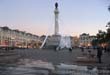
Pr. Dom Pedro IV
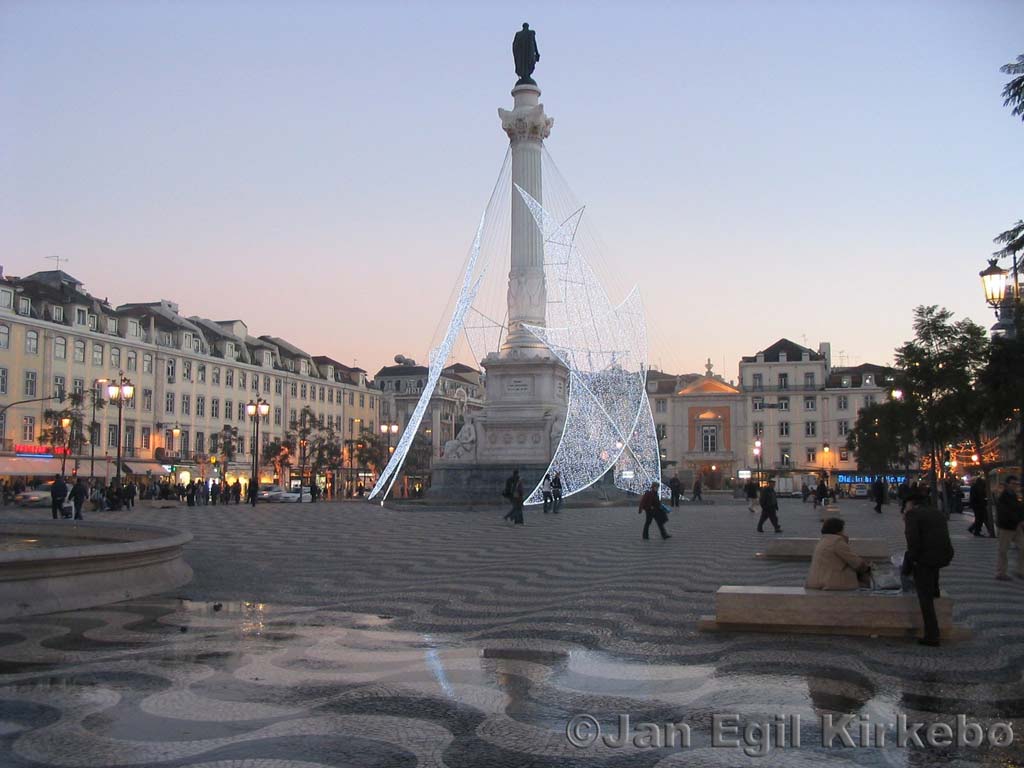
Praça Dom Pedro IV is easily recognized by its wave pattern, and is named after the 1826-28 Portuguese ruler who was also the first emperor of Brazil. There are numerous cafés and small shops in the buildings surrounding the square.
|
|
|
|
 |
Lisbon: Charming Capital
The cidade das sete colinas (city of the seven hills - nickname for Lisbon) is one of the most picturesque capitals of Europe. It has strong links to the past, reflected in the old buildings and narrow cobblestone streets. Lisbon is a mosaic of neighborhoods. Alfama is the oldest, with traces back to the Moors. Go to the commercial area of Baixa to see one of Europe's oldest examples of planned neighborhoods. Bairro Alto for nightlife with a personal touch. Head out to Belém to see grand architecture from the time of the discoveries. When you need a break from the city the nearby mountain village of Sintra makes for an excellent excursion, with its famous castles. |
Alfama: Historic Hill
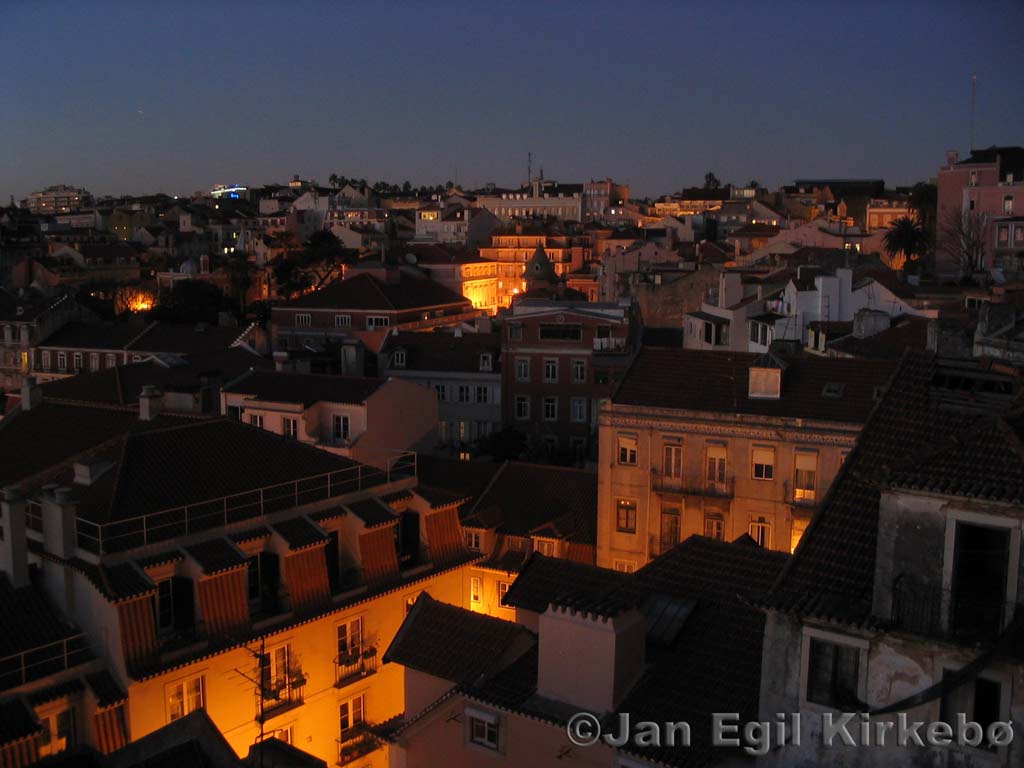
The old neighborhood of Alfama is one of Lisbon's gems, and dates all the way back to the 12th century. It is like a travel back in time, with traces of both the Arabs and the Romans. The name itself comes from the Moorish Al-hamma, meaning baths. The streets are narrow and hilly, with many restaurants/bars where you can hear the traditional mournful Portuguese music called fado. Try to get up high, and get a nice view of the whole neighborhood as well as the Rio Tejo (Tagus River). |
 |
 |
Lisbon: Tram Tour
A trip on tram 28 is an excellent way to see Lisbon. It starts at Martim Moniz near Rossio, and winds its way up the hills around the old Moorish neighboorhood of Alfama. It then heads back down (passing the Basílica da Estrela) to the square grid streets of Baixa, one of Europe's oldest examples of planned neighborhoods (built after the 1755 earthquake). It then passes the lower portions of Bairro Alto. By the time you reach the final stop of Prazeres you will have seen some of the most scenic neighborhoods of Lisbon. |
Belém: Pristine Manueline
Take tram 15 west along the Rio Tejo (Tagus River), and you reach the historic neighborhood of Belém. Its prime attraction is the grand Mosteiro dos Jeronimos. The monastery cost an equivalent of 70 kg of gold each year during the construction, a good deal of which was financed through the spice trade. It is a prime example of what is called Manueline architecture, with inspiration brought back from the explorations, as well as being influenced by the Gothic and Renaissance periods. Construction started in 1501, and took 70 years to complete. Don't miss the nearby and amazing Torre de Belém. |
 |
 |
Bairro Alto: High Life
Escalating the hills west of Rossio the commercial neighborhood of Baixa gives way to the shopping district of Chiado. After night falls follow the streets further up and you're in Bairro Alto, one of Lisbon's undisputed nightlife areas. After midnight crowds gather around storefronts that open up to reveal small bars. The crowd is a mix of local and tourist, straight and gay, and almost anything else you can imagine. When night surrenders to day head further up the hill to the neighborhood of Principe Real, and some nice views of the city. |
Estação do Oriente: Architecture Marvel
Estação do Oriente (Orient Station) is one of the main transportation hubs of Lisbon, for trains, metro, buses and taxis. Its glass and steel columns are reminiscent of palms, making the whole structure fascinating to look at (especially in sunlight or when illuminated at night). It was desinged by the great architect Santiago Calatrava from Valencia (Spain). Cross through the the shopping mall just across the street and you're in Parque das Nações (Park of the Nations), site of the 1998 World Expo. |
 |
 |
Lisbon: Funicular Transportation
Transportation in Lisbon is more charming than most cities. Much is owed to its geography; much of Lisbon has been built on its seven hills. No visit to Lisbon is complete without riding the century old trams. Though, the greatest attractions are the funiculars, of which there are three. These are Elevador da Glória, Elevador da Bica and Elevador da Lavra. Perhaps the most picturesque is the Elevador da Bica, which passes through a charming residential neighborhood just below Bairro Alto. Carris tickets are also valid on the funiculars. |
|
|
| Expo Site | |
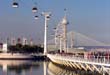
Parque das Nações
A pleasant day trip from central Lisbon is the Parque das Nações, the site of Expo 98. It boasts an Oceanário (aquarium), a sports/concert center, a shopping mall as well as restaurants. It's easily reached by metro, train or bus.
|
|
| Facts | |
República Portuguesa

Capital
Lisbon
Largest city
Lisbon
Population
10,605,000 (2006)
Area
92,391 km²
Official language(s)
Portuguese
Government
Parliamentary democracy
|
|
| History | |
Portugal
•1128: Becomes independent nation after Afonso Henriques defeats his mother and her lover in battle.
•1415: Start of Portuguese empire with conquest of Ceuta (in North Africa).
•1498: Vasco da Gama discovers sea route to India.
•1500: Pedro Álvares Cabral lands in Brazil and claims it to be Portuguese.
•1510-11: Afonso de Albuquerque conquers Goa in India and Melaka in present-day Malaysia.
•1580-1640: In union with Spain after death of heirless King Sebastian.
•1910: Revolution overthrows monarchy.
•1974: Leftist, military-led coup d'état leading to a liberal democracy two years later.
•1986: Joins European Union.
|
|
|