| Kraków | |
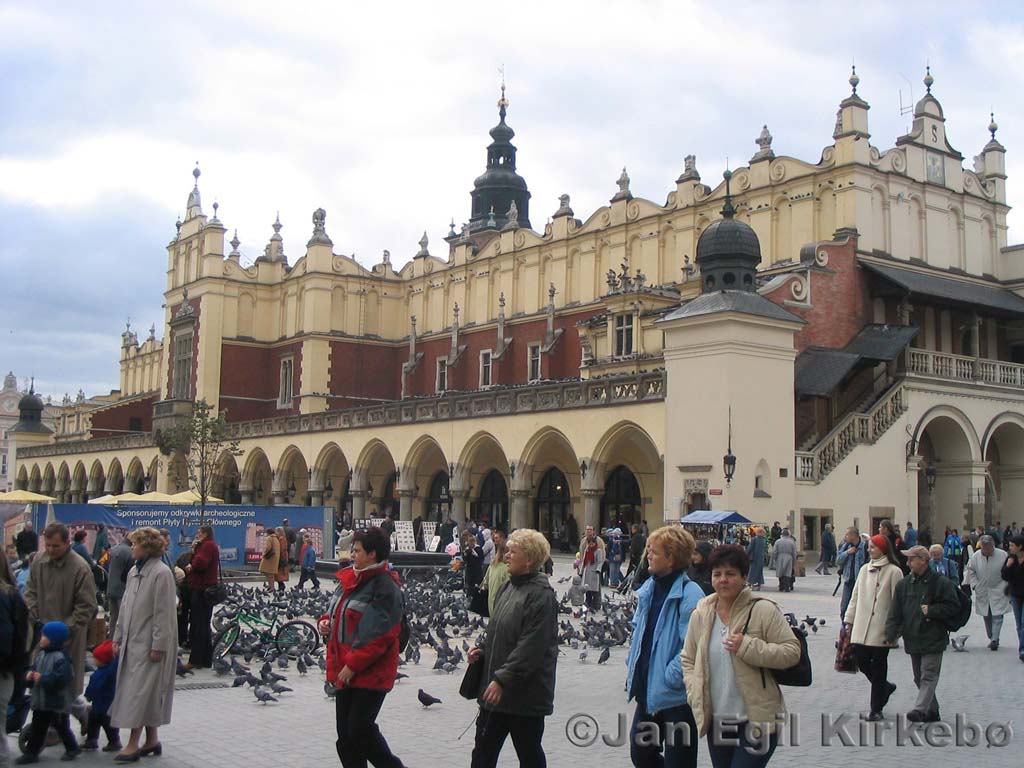
Sukiennice
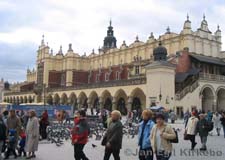
The Sukiennice is in the middle of Kraków's main square. The Cloth Hall is testimony to the former wealth of the city. In its heydays it traded exotic goods like spices and silk.
|
|
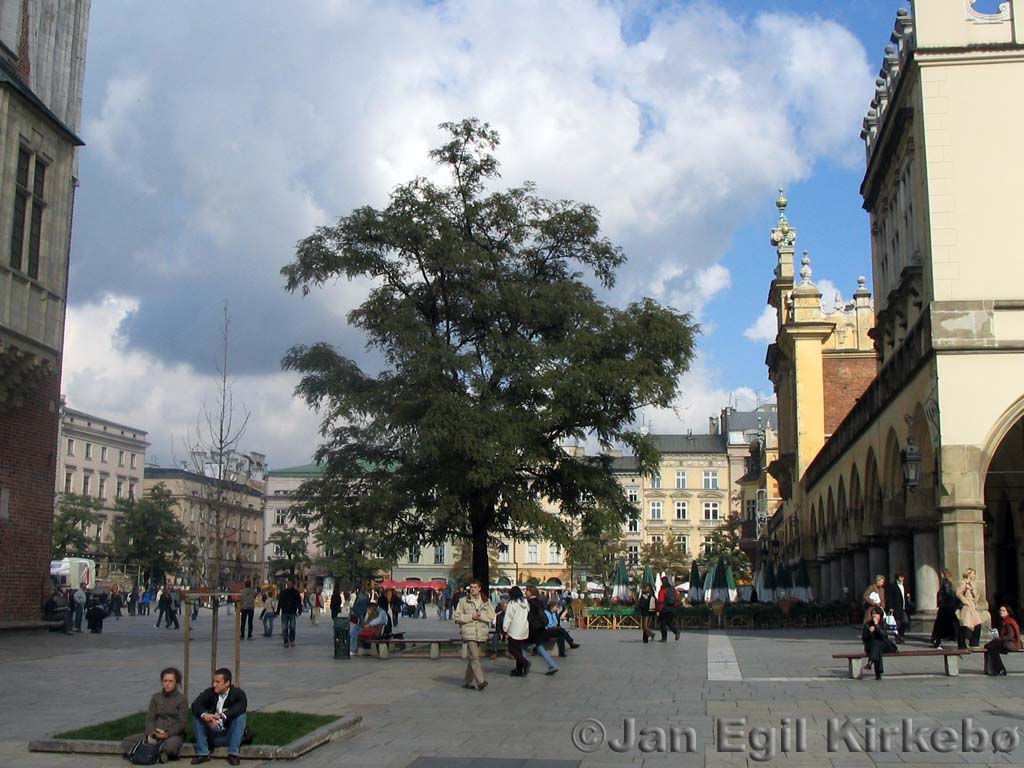
| Rynek Glowny | |
Kraków
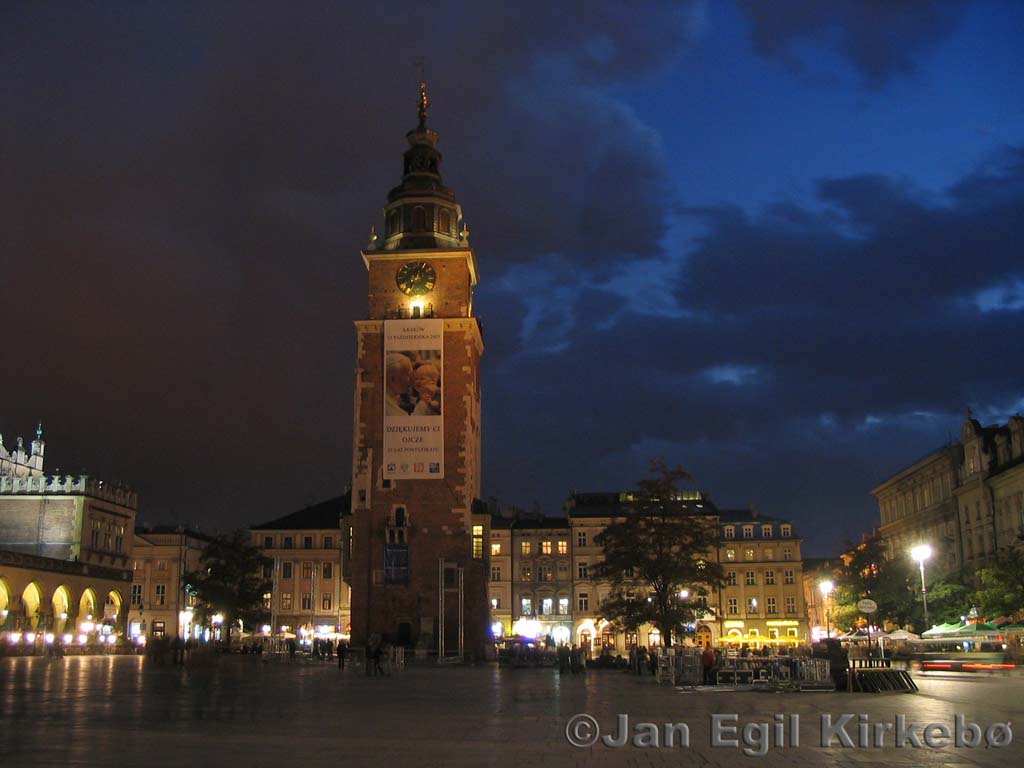
Kraków's Rynek Glowny (meaning Grand Square) dates back to 1257, drawn after the Mongols swept through town. It's a great place to hang out and watch life go by after some strenuous sightseeing.
|
|
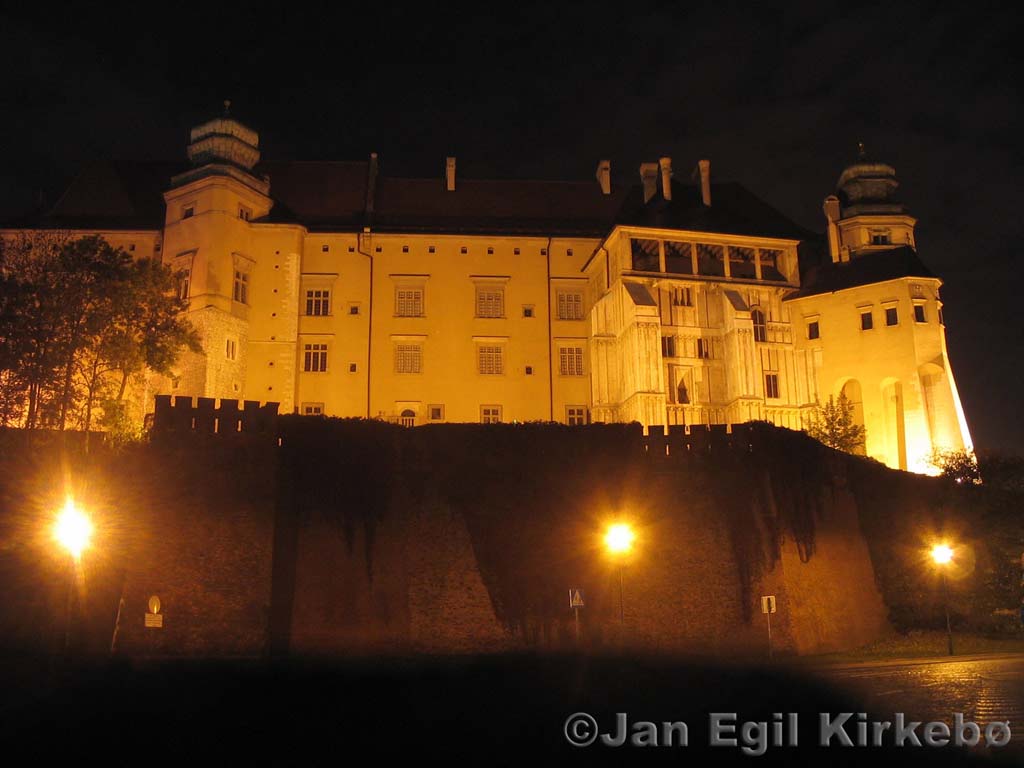
| Wawel Castle | |
Kraków
The importance of Wawel Castle has risen and fallen over time, from being the center of absolute power in Poland to being an army barracks in an outpost of the Austrian empire.
|
|
|
|
Poland: Future Past
Poland has quickly emerged through the iron curtain of the cold war, and is becoming a power to be reckoned with in Europe. The capital Warsaw is an interesting tourist destination in itself, if only for its role in history. Like many cities in Poland, the greater part of the city was destroyed during the World War II bombings. From a tourist's point of view, the jewel of Polish cities is the ancient capital Kraków, on the banks of the Wisla (Vistula) river. It is located just two hours by train south of Warsaw. |
 |
Warsaw: Palace of Arts and Culture
The communist Palace of Arts and Culture in the capital Warsaw stands as a lone reminder of a time quickly disappearing. At 230 meters (which includes the 43 meter tall spire) it is the tallest building in Poland. In the building there are more than 3000 rooms, spread over 42 floors. It was built as a gift from the Soviet Union, finished in 1955, built in the same style as the Seven Sisters in Moscow (a series of Stalinist scyscrapers). The Palace was a much hated building during the years of communism, but after the fall of the iron curtain it has gained a little more sympathy among the people of Warsaw. |
Kraków: Cultural Capital
Kraków was left largely unscathed by the bombings of World War II, and has the nicest and best preserved old town in Poland. The restaurants, cafés and relaxed atmosphere of the Stare Miasto (meaning old town) is enough to want most visitors to stay at least a couple of days. Unfortunately it's fast becoming less of a hidden gem and more of a mass tourism destination, so it is recommended to stay away during the high season. On the bright side the cobblestone streets, narrow alleys and cellar restaurants are very cozy during fall and winter. |
 |
 |
Kraków: St. Mary's Basilica
The impressive and well kept St. Mary's Basilica (Bazylika Mariacka in Polish) in Kraków dates all the way back to 1220. It's easily recognized by the two towers of unequal height and appearance. Don't miss the wooden altar on the inside, carved by the 13th century German sculptur Veit Stoss. The brick basilica is well known in Poland for it's bugle, which is played every hour (called the hejnal). If the tune sounds like it ends abruptly, you're right. The song commemorates a 13th century bugler who got a shot in the throat while warning of a Mongol invasion. The hejnal is played live on national Polish radio at noon every day. |
Kraków: Wawel Castle
One of Kraków's top landmarks and close to the heart of every Pole is Wawel Castle, situated on top of Wawel Hill beside the Vistula River. From 1038 until 1596 this was the power center of Poland, during which the leaders of Poland resided here. It is no less impressive now. It has been built and rebuilt again by great rulers such as Kazimierz the Great and Sigismund the Old. The adjoining Wawel Cathedral is where the kings were crowned, and where they have also been burried. |
 |
 |
Kraków: Nightlife
A city with over 100.000 students and plenty of young tourists on vacation is bound to be a good recipe for great nightlife. Add ancient architecture to your nightly venture, and you have a trip out on the town in Kraków. In the old town many of the bars are in cellars, where the piwo (meaning beer) flows freely into to the early morning hours. If you're looking for something low-key head to the old Jewish neighborhood of Kazimierz, just outside the old town. While in town don't forget to try the local speciality Tatanka, a drink mixing Zubrowka vodka with a dash of apple juice, giving a taste of apple pie. |
|
|
| Wawel Castle | |
Kraków
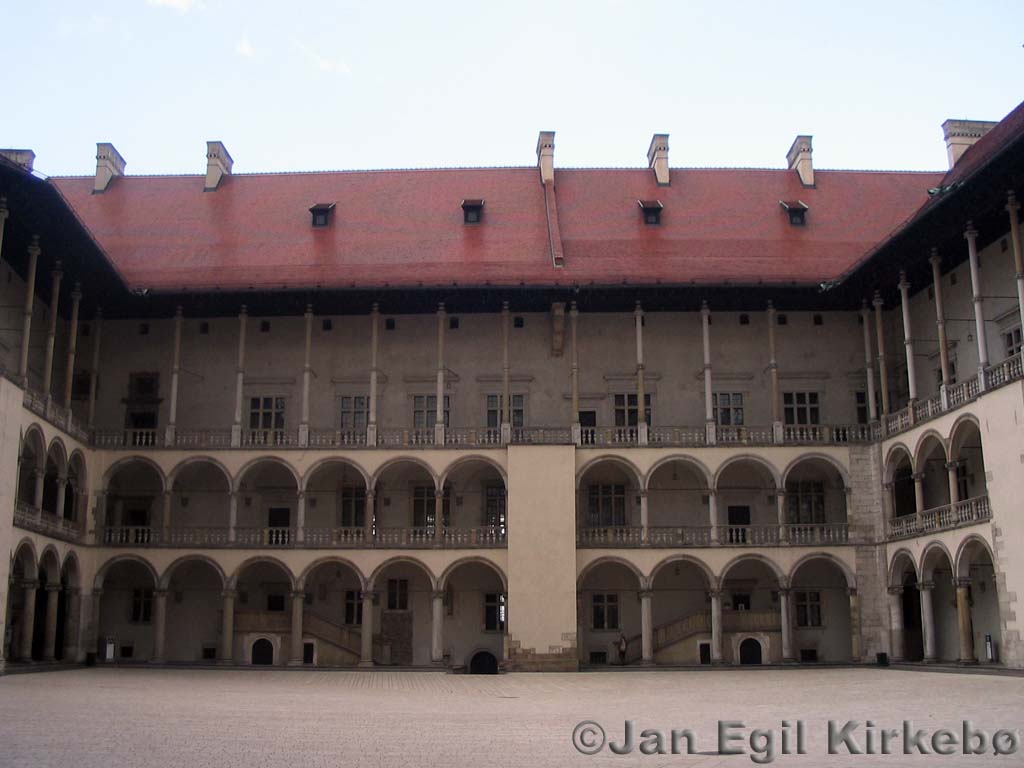
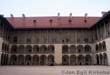
The arcaded courtyard of Wawel Castle was once the scene of tournaments and other spectacles, with royalty and celebrity watching on.
|
|
| Facts | |
Rzeczpospolita Polska

Capital
Warsaw
Largest city
Warsaw
Population
38,500,000 (2006)
Area
312,685 km²
Official language(s)
Polish
Government
Republic
|
|
| History | |
Poland
•966: Catolic Christianity adopted as official religion.
•1569: United with Lithuania in Polish-Lithuanian Commonwealth.
•End of 17th century: Country divided between Russia, Prussia and Austria.
•1918: Regains independence.
•1939: Invaded by Nazi Germany.
•1945: Soviet Union installs communist government.
•1990: Lech Walesa elected as president, ending Soviet dominance.
•2004: Joins European Union.
|
|
|