| Hill Statue | |
Kaesong
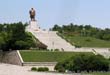
No major city in North Korea is complete without a bronze statue of "Great Leader" Kim Il-Sung, placed on the top of a hill for everybody to see. Even long after his death, Kim still watches over his people.
|
|
| Street Scene | |
Kaesong
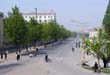
Kaesong is the second largest city in North Korea. Though, even in the center you could wait a long time to see a car pass by. A few people have bicycles to get around, but most have to settle for walking.
|
|
| Money's Worth | |
Kaesong
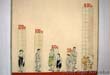
Japan annexed and occupied Korea from 1910 until 1945. The poster shown illustrates how Koreans were traded by Japanese, at prices less than that of a cow.
|
|
|
|
South: Ginseng and War
The ancient Korean capital of Kaesong is a city of 300,000 people, but you wouldn't know that from walking around the old town of the city. Without the protruding sound of cars predominating most other cities in Asia, you feel like you have come to a small village of the past. The tension of the demilitarized zone, just 10 kilometers away, also seems like a world apart. If you want to do some shopping while in Kaesong pick up some of its famous ginseng (called insam in Korean). |
 |
 |
Panmunjom: Tension Land
If it weren't so serious, the demilitarized zone (DMZ) could almost pass as a theme park for war. Since the North and South signed an armistice in Panmunjom village in 1953, ending the Korean War, a contigent of one million soldiers have starred eye to eye, prepared for war if necessary. Though one of the tensest areas on earth, the border itself is only marked with a small line of concrete. Inside one of the temporary blue houses in the Joint Security Area you can even cross it. Kaesong is only 10 kilometers away, while Seoul is 60 kilometers to the south. |
Kaesong: Ancient Capital
Kaesong was the capital of the Koryo kingdom from 918-1392, after which the capital was moved to present-day Seoul (current capital of South Korea). There's still sights in the Kaesong dating back to the period of the Koryo Kingdom, and with its old town it's a pleasant place to spend a few days. If it wasn't for the uncrossable border, Kaesong would be only a little over an hours drive from Seoul, the capital of South Korea. There's talk of opening a cross-border railway connection, though this still seems to be a few years away. |
 |
 |
 |
 |
Glimpse of the South
Sights from Kaesong and Panmunjom (left to right):
-Traditional Korean meal served at the Folk Hotel in Kaesong.
-Overview of the border at the Joint Security Area in Panmunjom, looking across to South Korea.
-All the main street of Kaesong needs to fulfill its function is traffic. |
Kaesong: Imperial Grave
A short ride outside of Kaesong is the tomb of King Gongmin, the 31st ruler of the Koryo kingdom (1352-1374). The North Korean regime likes to identify themselves with the powerful Koryo kingdom. If you visit Kaesong you can therefore be sure that a visit to the tombs will be on your itinerary. The tombs themselves are located up on a hill, with a nice view of the surrounding scenery. The construction of the tombs was started after the death of Kongmin's wife, and their seperate resting places are shaped as two mounds, both about three meters tall. |
 |
 |
Kaesong: Old Town
With most of Korea having been erased during the Korean War, the old town of Kaesong is a rare opportunity to see what Korean citites used to look like. As part of all tours in Kaesong tourists are accomodated in the Folk Hotel, which is a whole block of the old town converted into a tourist hotel. It is probably the hope of the regime that the sealed of hotel satisfies the curiosity of the foreigners enough so that they won't want to see other parts of the old town and actually end up mingling with the locals. |
|
|
| People | |
Kaesong
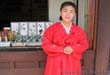
The North Koreans are warm and generous people. They are very polite and coerteous, and if you are lucky enough to exchange more than just smiles it is not surprising to see they share the same dreams.
|
|
| Facts | |
Chosŏn Minjujuŭi Inmin Konghwaguk
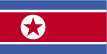
Capital
Pyongyang
Largest city
Pyongyang
Population
23,113,000 (2006)
Area
120,540 km²
Official language(s)
Korean
Government
Communist single-party state dictatorship
|
|
| History | |
North Korea
•676: Silla Kingdom first unified state to cover most of Korean peninsula.
•935: Silla Kingdom gives way to Goryeo Dynasty.
•1392-1910: Korean peninsula ruled by Joseon Dynasty.
•1910-45: Annexed by Japan.
•1945: Korean peninsula divided, with establishment of seperate governments in communist North and democratic South.
•1948-94: Led by dictator Kim Il-Sung.
•1950-53: Korean War, initiated by an attack from the North.
•1997: Kim Jong-il confirmed as head of state.
|
|
|









 -->
--> 