| Domingo É Dia | |
Rio de Janeiro
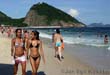
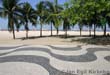
Rio wouldn't be Rio without sunny Sundays on the beach. It's the best place for observing Cariocas in all colors, shapes and sizes.
|
|
| In the Shadow | |
Favelas
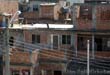
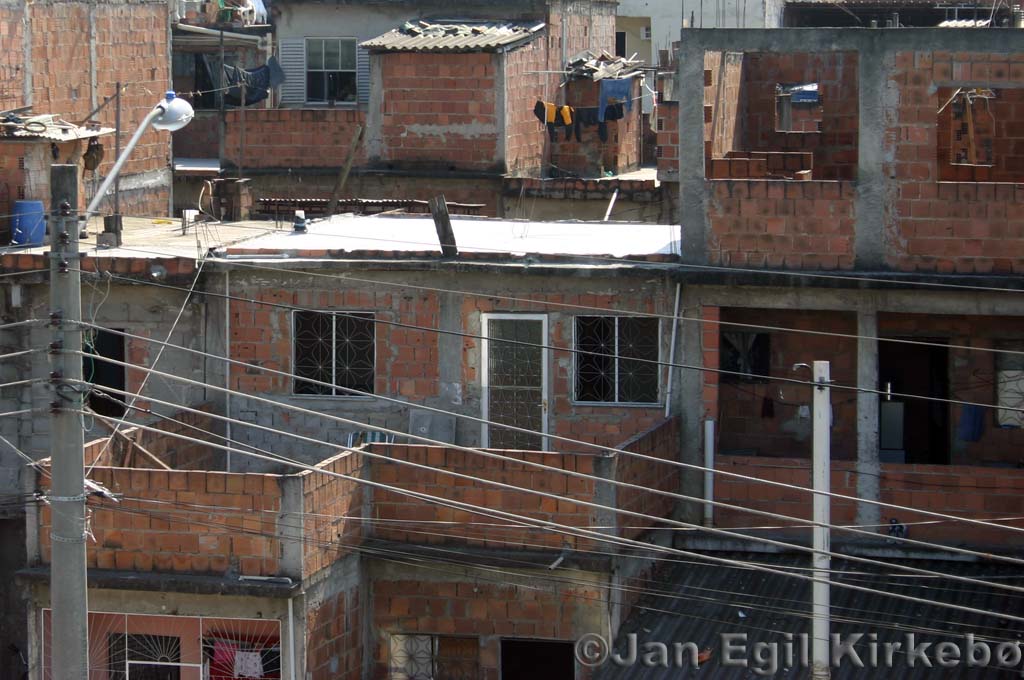
Not mentioned in the glossy folders of the Tourist Office, the favelas (shantytowns) are the reality most Cariocas live in. Run by druglords, the murder rates in the favelas are often higher than in many warzones.
|
|
| Sugar Loaf | |
Rio de Janeiro
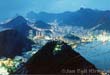
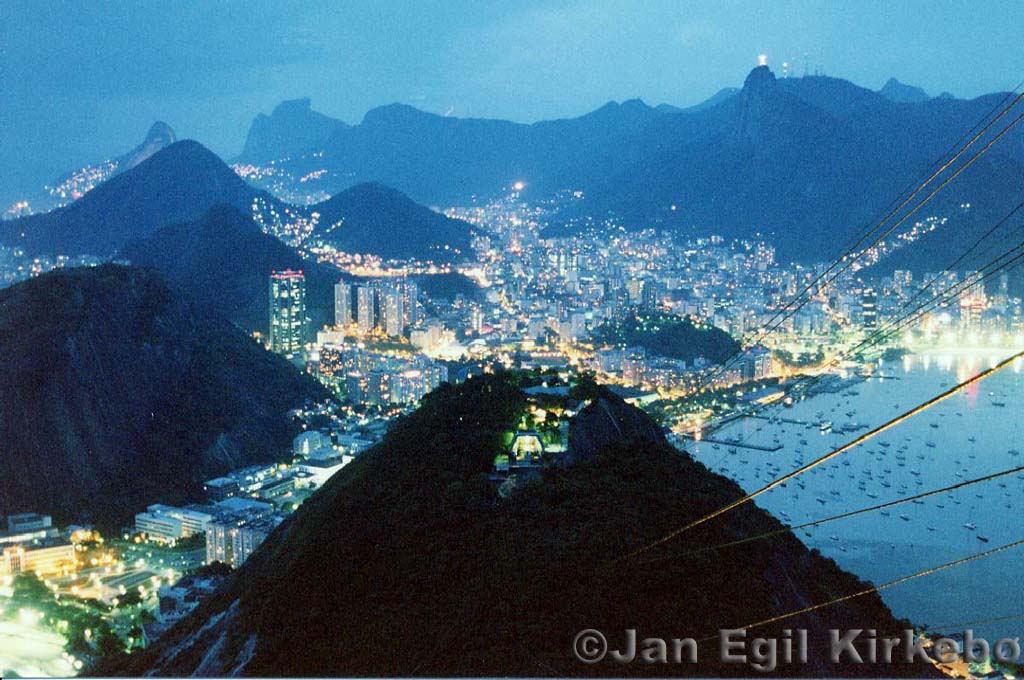
Rising 396 meters straight up from the waters of Guanabara Bay, Pão de Açúcar (Sugar Loaf) is one of Rio's most recognizable landmarks. Its cable car was featured in one of the scenes from the James Bond movie Moonraker.
|
|
| Media | |
Brazilmax.com
"The Hip Guide"
Favela Tourism Workshop
Visit Rocinha, the largest slum in Latin America
Rio de Janeiro
Prefectural site
|
|
|
|
Rio de Janeiro: Cidade Maravilhosa
Few cities in the world have been blessed by as much natural beauty as Rio de Janeiro. Its name conjures images of white-sand beaches (37 in total), the Cristo Redentor, carnival, a football-game at Maracanã, samba or favela. Rio de Janeiro is a diverse city, from the 19th century hillside neighborhood of Santa Teresa to the Americanized suburb of Barra da Tijuca. Though, most visitors tend to stick to the beach neighborhoods of Copacabana and Ipanema, with the near-mandatory excursions to Corcovado and Pão de Açúcar (Sugar Loaf). |
 |
 |
 |
Corcovado
Corcovado (meaning hunchback in Portuguese) mountain is home to the famous Christ statue. The best time to visit Corcovado and the Cristo Redentor is for sunset on a clear day. Taking in the view it is hard to imagine that there could ever exist a more beautiful city. |
Architecture: Who's Oscar?
Considering the easy nature of the Brazilians, it's almost an enigma that such a country could foster an architect like Oscar Niemeyer. He is the main architect behind Brasilia, the artificial and mostly unbearable capital of Brazil. Perhaps his greatest work is the Niterói Contemporary Art Museum in Niterói, a short boatride just across the Guanabara bay from Rio de Janeiro. Oscar Niemeyer is almost 100 years old, and still going strong. He is currently working on a statue to put down the US blocade of Cuba. |
 |
 |
Copacabana: Cross Section of Life
The intensity of Copacabana, famous beach and neighborhood in Rio de Janeiro, is easily understood from a short geography lesson: 350,000 people living in a four block wide neighborhood crammed between mountains and sea. You could spend days or weeks just in Copacabana, and some tourists do exactly that. The highlight of the year is New Year's (Reveillon) when two million people dressed in white converge on the beach to see the fireworks and jump seven waves. |
São Cristóvão: Imperial Park
A pleasant trip out of Rio's Zona Sul (South Zone) is to Quinta da Boa Vista park in São Cristóvão (just north of Corcovado mountain). Inside the park you'll find both the former imperial mansion (the Paço de São Cristóvão) currently containing the Museu Nacional, as well as the Jardim Zoológico (Rio's zoo). On sunny weekend days it fills up with families picknicking and basking in the sun. To go there get off at São Cristóvão metro station. |
 |
 |
Pedra da Gávea: Top View
It should take between two and four hours to reach the top of Pedra da Gávea. Once there the view is spectacular. You have an unhindered view of most of Zona Sul (South Zone), Zona Oeste (West Zone), Floresta da Tijuca, not to mention the Atlantic Ocean. On a clear day you can see all the other major peaks of Rio de Janeiro, like Corcovado, Pão de Açúcar, Dois Irmãos and Pico da Tijuca. Beholding the natural beauty of Rio de Janeiro just below the strains of the ascent are well worth it! |
|
|
| Marxist Design | |
Copacabana/Leme
Avenida Atlântica is Copacabana's beach avenue. Its current form goes back to 1971, which is also when it got it's characteristic mosaic sidewalks designed by landscaper and architect Burle Marx.
|
|
| Facts | |
Location
In Rio de Janeiro state on the south-eastern coast of Brazil
Origin of Name
Portuguese for January River
Population
6,000,000
(Brazil's second largest city)
Temperature
Between 15 and 40 degrees
Municipality area
1260 km²
Highest Mountain
Pico da Tijuca (1022 m)
Official Song
Cidade Maravilhosa
|
|
|









 -->
-->